When people decide to stop smoking, the first word that often comes to mind is “willpower.” Many attribute their failures to a lack of self-control. Yet others say they simply quit because there was no opportunity or environment to smoke. So, which factor matters more—individual willpower or one’s surroundings? How do these two elements interact, and how can they be balanced effectively?
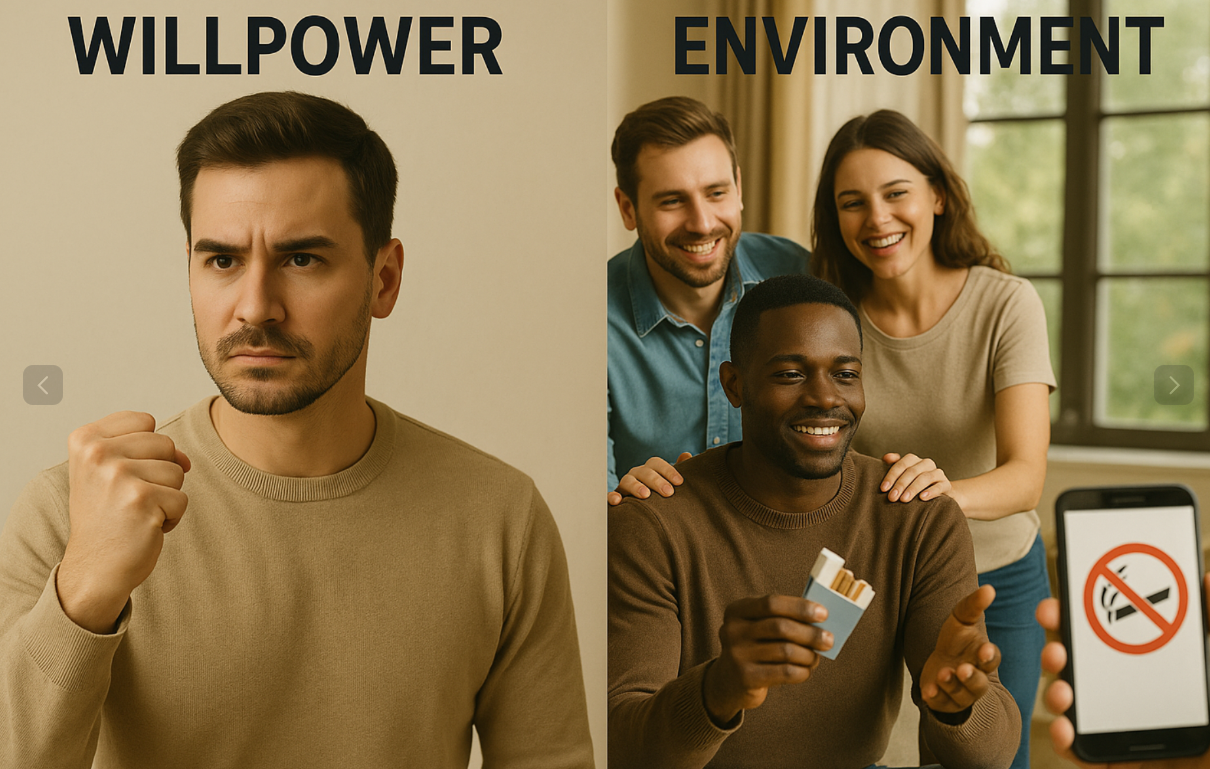
First, let’s look at the role of willpower. To begin quitting, one must rely on personal resolve and self-control. To overcome nicotine addiction, you must endure discomfort and temptation. People with Thinking (T) or Judging (J) traits in MBTI tend to emphasize goal-achievement and self-regulation, which helps them adhere strictly to their quitting plans. Tools like quit apps, checklists, and progress trackers help them concretize their will, making it more actionable.
However, willpower has its limits. In high-stress periods, or when fatigue or unexpected life events occur, it weakens easily. It is precisely in such moments that environment plays a stronger role. For example, if you are surrounded by smokers or constantly exposed to smoking areas (break rooms, outdoor smoking spots, etc.), even strong willpower can struggle against frequent temptation.
On the other hand, if your environment is set up favorably, you can succeed in quitting even with relatively weaker willpower. Examples include working or studying in smoke-free spaces, having supportive family or friends, regularly visiting quit-clinics, or using cessation aids. MBTI types that lean toward Extroversion (E) or Feeling (F) may especially benefit from a pro-quitting environment since they are more responsive to social cues and encouragement.
In reality, willpower and environment function complementarily. A strong internal resolve launches the quitting process, and a well-structured environment sustains it. You might declare your intention publicly, remove triggers like cigarettes or lighters, and establish replacement behaviors (exercise, walking, hobbies) in advance.
Digital surroundings matter too. Frequently encountering pro-quitting content on YouTube, Instagram, or blogs can reinforce your resolve. Conversely, reducing exposure to scenes that glamorize smoking helps maintain your commitment.
In the end, instead of framing the issue as “willpower vs environment,” the more effective approach is to see them as interactive forces: use willpower to build momentum, and let environment support and strengthen that momentum. By matching your personality and daily habits, and by thoughtfully designing both your internal mindset and external circumstances, success in quitting smoking becomes far more achievable. Start with small environmental changes today. Willpower may fade, but your environment can continue to uphold your resolve for the long term.