When you start your quit-smoking journey, do you prefer to approach it with a detailed plan, or do you try to stop all at once on a sudden impulse? Just as people differ in personality, the way they attempt and succeed in quitting smoking also varies significantly. In particular, whether someone is a Judging (J) personality type or a Perceiving (P) personality type can make a big difference in their success rate.
First, those with a Judging (J) personality tend to favor a concrete and systematic approach. J types like to set clear goals and schedules, and they often adhere strictly to detailed plans and timelines. So when they resolve to quit smoking, they tend to prepare in advance: choosing a specific start date, devising stepwise goals, and preparing methods to manage cravings.
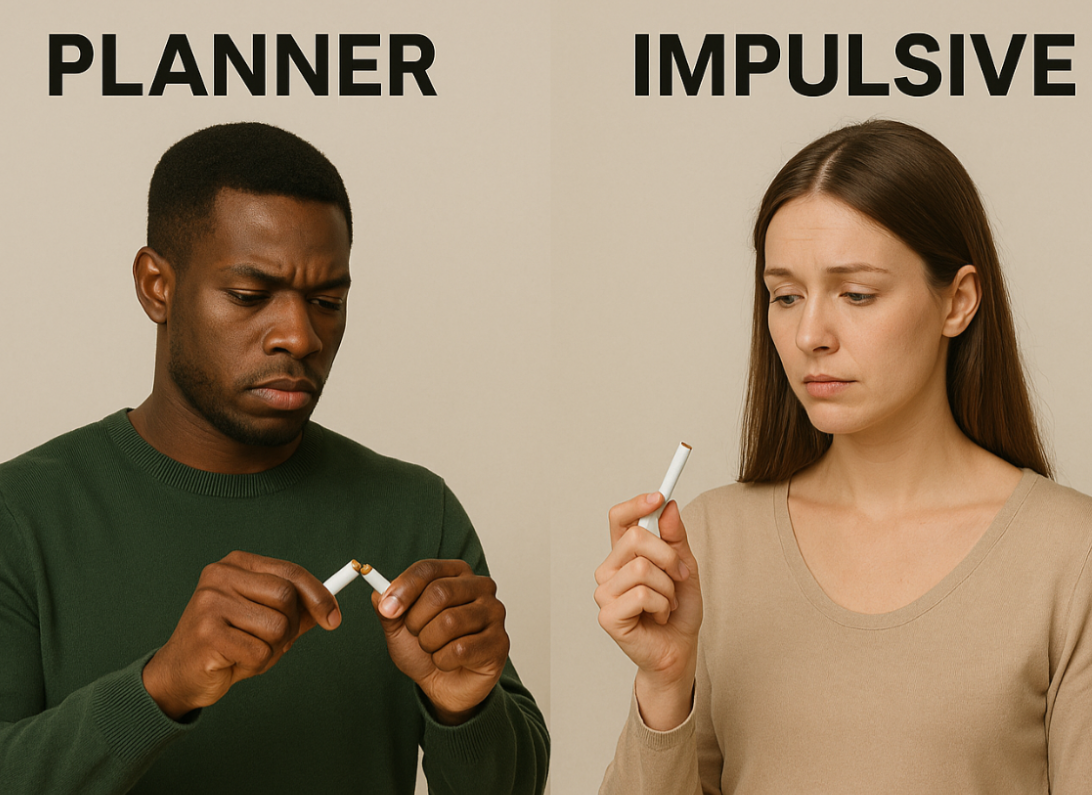
Such a planned approach increases the chance of success even when unexpected urges to smoke arise. Because J types have a prepared response — for example, drinking water or doing light stretches when a craving hits — they can more effectively counteract the impulse to smoke.
On the other hand, Perceiving (P) personalities prefer an impromptu, more flexible approach. They tend to resist overly strict or highly detailed plans, favoring the ability to adapt to circumstances instead. People with P types often choose to act on a momentary resolve to quit rather than following a structured plan. But because they are less plan-minded, they may be more vulnerable to unplanned cravings during the quitting process. That said, P types aren’t doomed to fail. In fact, when they avoid rigid planning and instead adopt flexible, situational coping strategies, they may do very well. For example, when a craving strikes, a P type might shift attention to a new hobby or an activity that piques their interest — this kind of adaptive switching can be an effective strategy.
Interestingly, the difference between J and P types also connects deeply with how they manage stress. J types tend to respond to stress by readjusting plans or exercising control over their situation. P types, however, often relieve stress through spontaneous mood shifts or immediate emotional responses. These differing stress-coping styles influence the quitting process. J types can more easily stick to their prearranged stress-management strategies, while P types need a variety of quick, accessible alternatives at hand — things like music, physical movement, or short distractions — to replace smoking when stress hits.

Moreover, this J-vs-P distinction is also tied into how individuals relate to their social environment. J types can effectively incorporate external support — such as encouragement from family or joining a smoking-cessation group — into their structured quitting plan. P types, by contrast, may feel pressured or constrained by too much external involvement. They often prefer to maintain autonomy and resist interference, which means that a more private, self-directed method of quitting may suit them better.
In conclusion, recognizing whether your personality leans toward planning or spontaneity is key to shaping a quitting strategy that works for you. If you are a J type, develop a detailed, stepwise plan and follow it diligently. If you are a P type, rely on adaptable methods and prepare a menu of alternative activities you can turn to when cravings arise. By aligning your quit plan with your personality, you can significantly increase your chances of success. Quitting smoking isn’t about forcing yourself to fit someone else’s method — it’s about finding a strategy that fits you.